
What Your Developer Should Show You About AI-Generated Code
Ask for a generation record, relevant tests and a human review trail. Put these deliverables in your development agreement so you can trace decisions and fix problems later.
You do not need to read software code to ask sensible questions about how it was built. If your developer uses AI to help write it, you should still be able to see what was produced, how it was checked and who approved it.
The important distinction is between using AI to draft code and accepting that code into your business systems. Drafting can be assisted. Responsibility for what reaches production should remain with a person.
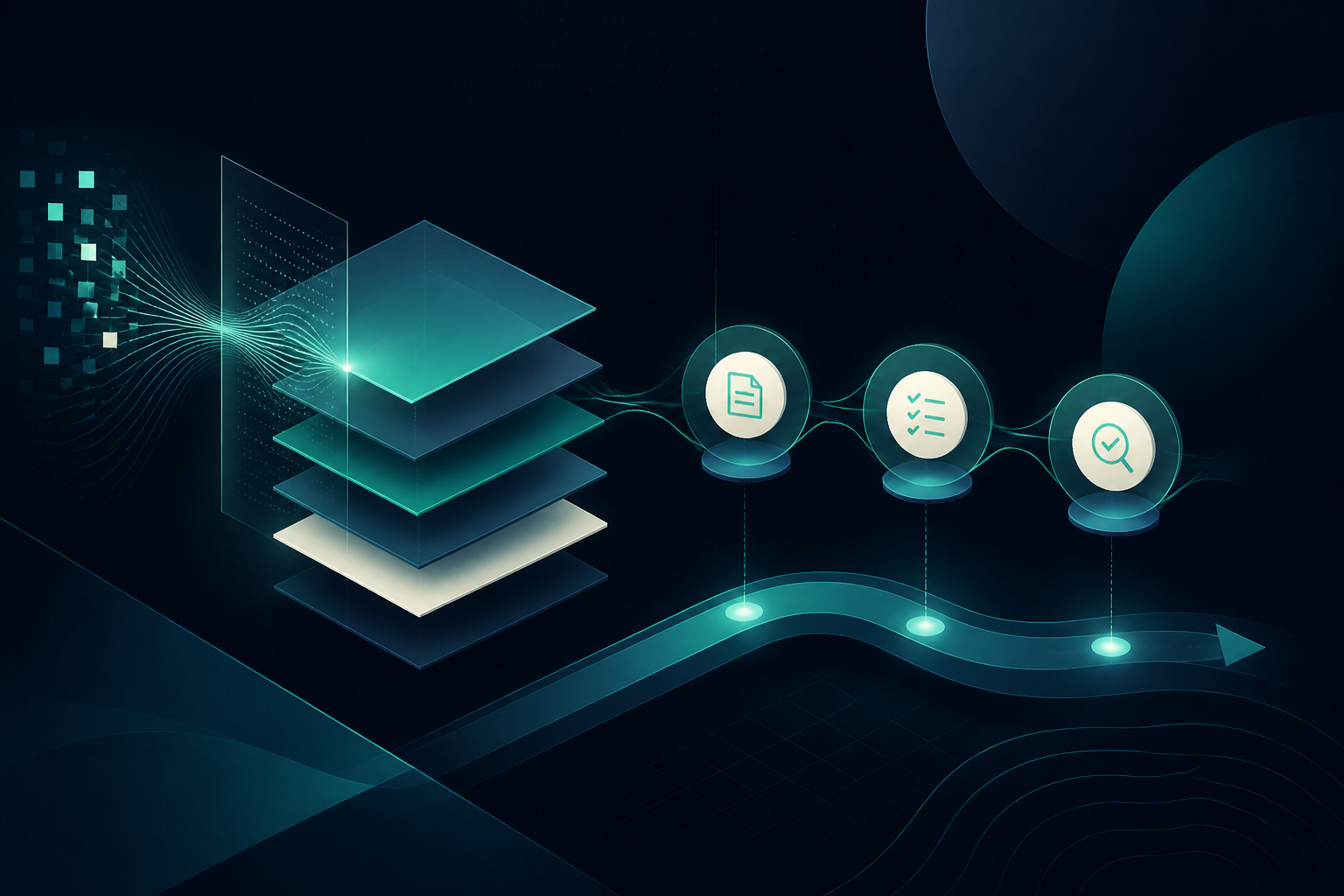
Ask for three things: a generation record, test evidence and a human review trail. These are recommended deliverables to discuss for your proposal or development agreement, not optional explanations requested after something breaks.
AI-assisted work still needs an accountable owner
AI tools can help developers create initial code structures, refactor existing code and draft tests. That does not establish whether the result meets your requirements, handles your data correctly or works with the rest of your software.
Consider a hypothetical booking system. An AI-assisted change might correctly display available appointments but fail to prevent two customers from booking the same slot. The screen looks right. The business rule is still broken.
This is why “we use AI to build faster” is not enough information to approve a development approach. You need to know how generated work becomes reviewed, tested software.
At TEFY, AI-driven development is how we build, not what we build. It is distinct from building a product that contains AI functionality. Engineers set the architecture and acceptance criteria, and every change is reviewed by a named engineer. Humans remain accountable for what reaches production.
TEFY describes a clear record of what was generated and what was checked. The checklist below is broader guidance for discussing evidence with any developer, not a statement of TEFY’s contractual deliverables.
Request a record of what AI generated
Ask your developer to keep a practical record distinguishing AI-generated work from work written by hand, including generated work that a person later revised.
This does not need to be a transcript of every interaction with an AI tool. It should be specific enough to identify the affected work and understand how it was handled.
A useful record includes:
- The feature or change being delivered.
- Which parts were generated, written by hand or substantially revised by a person.
- What the AI tool helped with, such as an initial draft, refactoring or test generation.
- A reference to the relevant saved code change.
For example, a hypothetical entry could say: “AI drafted the appointment reminder function and its initial tests. The developer revised the date handling and wrote the customer permission check.”
That tells you more than “AI was used on this project”. It also avoids pretending that every line has a simple origin. Generated code is often edited, combined with existing work or replaced during review.
Agree on the level of detail before development starts. A brief entry for each meaningful change is more useful than an ambitious reporting requirement nobody maintains. Keep the record with the project documentation so it remains available during handover.
Request tests tied to business requirements
A statement that “all tests passed” is incomplete without knowing what those tests checked.
Ask for a plain-language summary connecting the tests to the behaviour you commissioned. You do not need to understand the testing software. You do need to recognize your workflow in the evidence.
For a hypothetical invoice approval workflow, that might mean checking that:
- An invoice with missing supplier details is flagged for review.
- A user without approval permission cannot approve payment.
- A repeated submission does not create a duplicate invoice.
- A failed connection leaves the invoice in a recoverable state.
Request the test results for the version being released, along with known gaps and any manual checks. Evidence from an earlier version may not cover the final change.
AI can help generate tests, but those tests also need review. A test can repeat the same mistaken assumption as the code it checks. Someone must compare both against the agreed business requirement.
Ask for failures and unusual conditions to be covered, not just the normal path. What happens when a file is missing, access is denied or an external system stops responding? These are ordinary operating conditions, not obscure technical details.
TEFY’s delivery approach includes validation, evaluation and AI-assisted engineering with human review on every change. The evidence you receive should be agreed in your project scope rather than inferred from a description of the process.
Request a human review and release trail
The third artifact is evidence that a named person reviewed the change and accepted responsibility for releasing it.
A useful review trail identifies:
- Who reviewed the work and when.
- Which saved version they reviewed.
- What issues they raised and how those issues were resolved.
- Any remaining limitations accepted for release.
- Who authorized deployment.
Developers often keep this information in their code management system. Ask for access or an export as part of handover, with a readable summary where necessary.
The review should cover whether the change fits the existing system, respects access permissions and meets the agreed requirements. Running automated checks is useful, but it is not the same as human review.
For sensitive actions, such as changing payment details or deleting customer records, agree on the approval process in advance. Your business owner or operations lead may need to approve the intended behaviour, while the engineer remains responsible for the implementation.
Put the evidence in the agreement
These records protect your business by reducing uncertainty when something goes wrong. They help a developer locate the affected change, understand what was checked and see why a decision was made. They also help a replacement team take over without reconstructing the project from memory.
They do not guarantee defect-free software or settle responsibility for a problem. This is general procurement guidance, not legal advice. Seek your own legal advice on contract wording and liability.
Discuss adding these deliverables to your next proposal:
- A maintained record of AI-generated, human-written and human-revised work.
- Test evidence linked to agreed requirements and the released version.
- A named human review and release approval trail.
- Handover access to these records, including known limitations.
Ask a prospective developer to show you the format they will use before you sign. A sample record can make expectations much clearer than a general promise of quality.
If you are considering a build with TEFY, a free fit call can help establish whether the project matches our services. Whatever team you choose, make evidence of review part of what you agree to buy.